Posted on

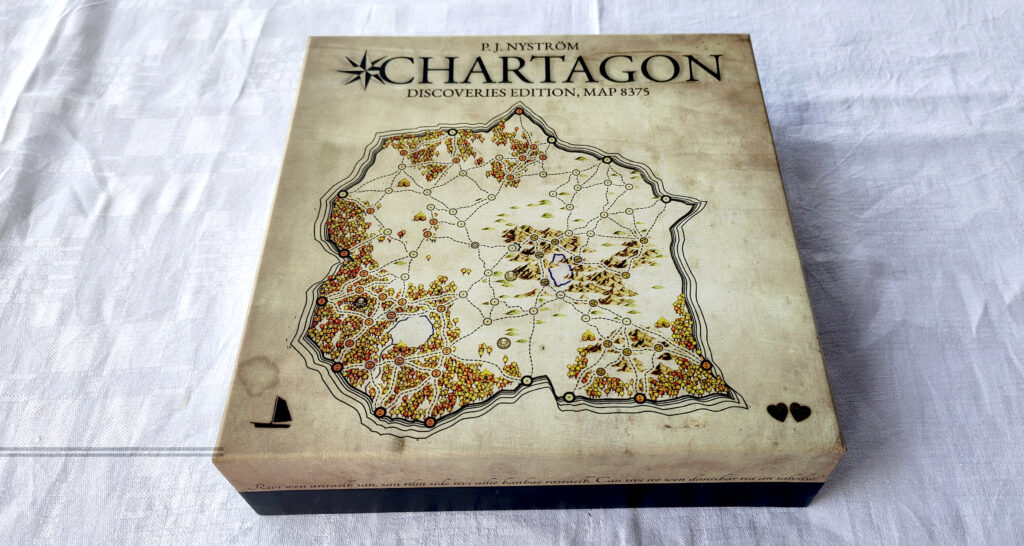
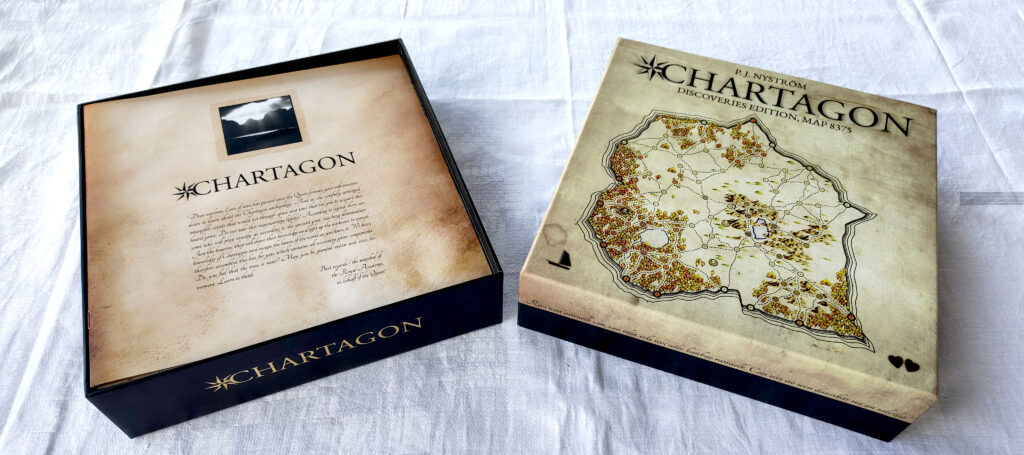
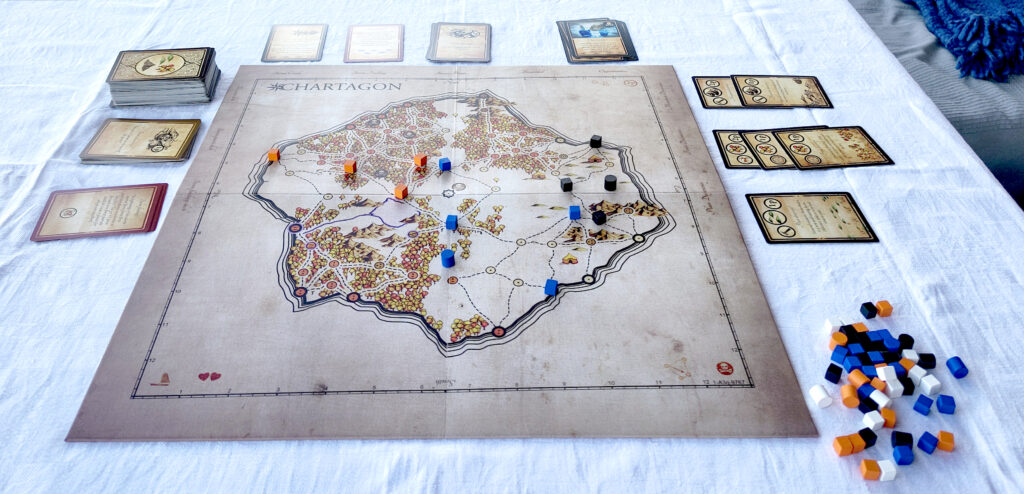
Announcement: Chartagon Discoveries, the real deal!

We are super happy to announce the very first, real beyond prototype version, of Chartagon Discoveries!!! This is THE game, which most people only call “Chartagon”, and that we have game tested and redesigned for around 10 years by now. The wait is over. We’ve only got 30 copies, and only 25 are for sale (with collectors certificates), since five of the copies will be sent to reviewers. The good thing is, if we need more, we can get as many as we want, on pretty short notice.

This game has come a long way, but we still keep to the original idea: you should be able to learn the game (~10 minutes) and play the game (~40 minutes) during a lunch break. After a few games, you can fit two games without cards, i.e., the competition version, within a lunch break. The playing time is similar for all number of players, and if you want to play on a larger map or use two maps at the same time you can use two decks of cards to double the playing time.

In case you want to know more about the game; here is the rule book! Enjoy!!!

Posted on

Announcement: LULO is here!

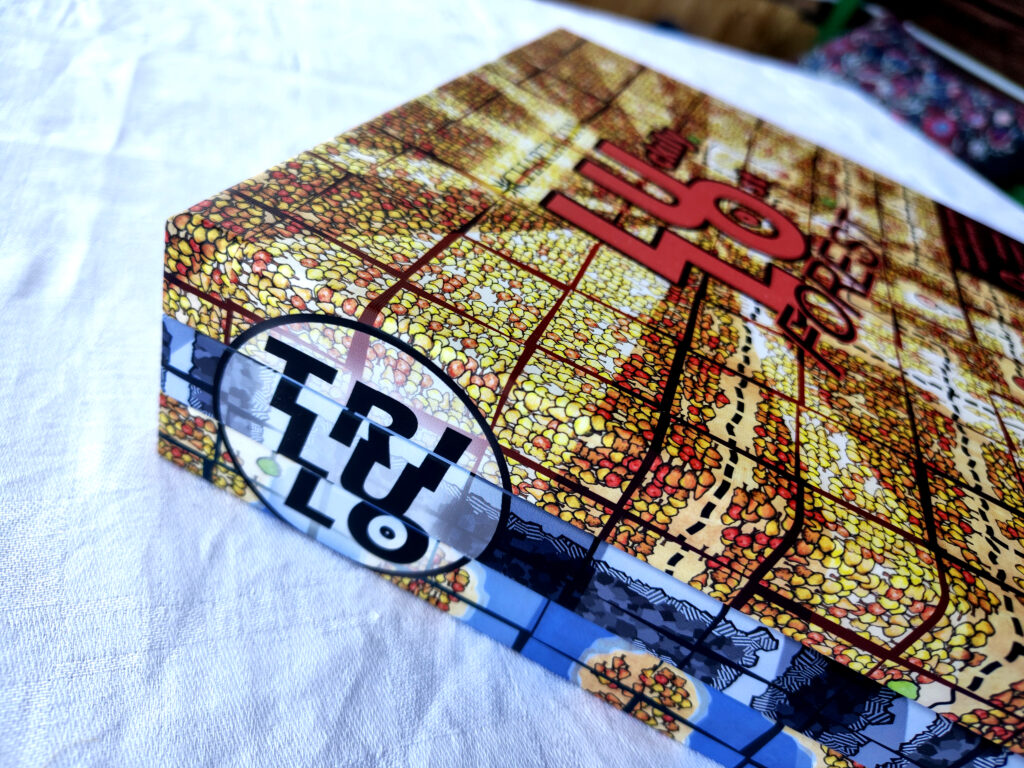
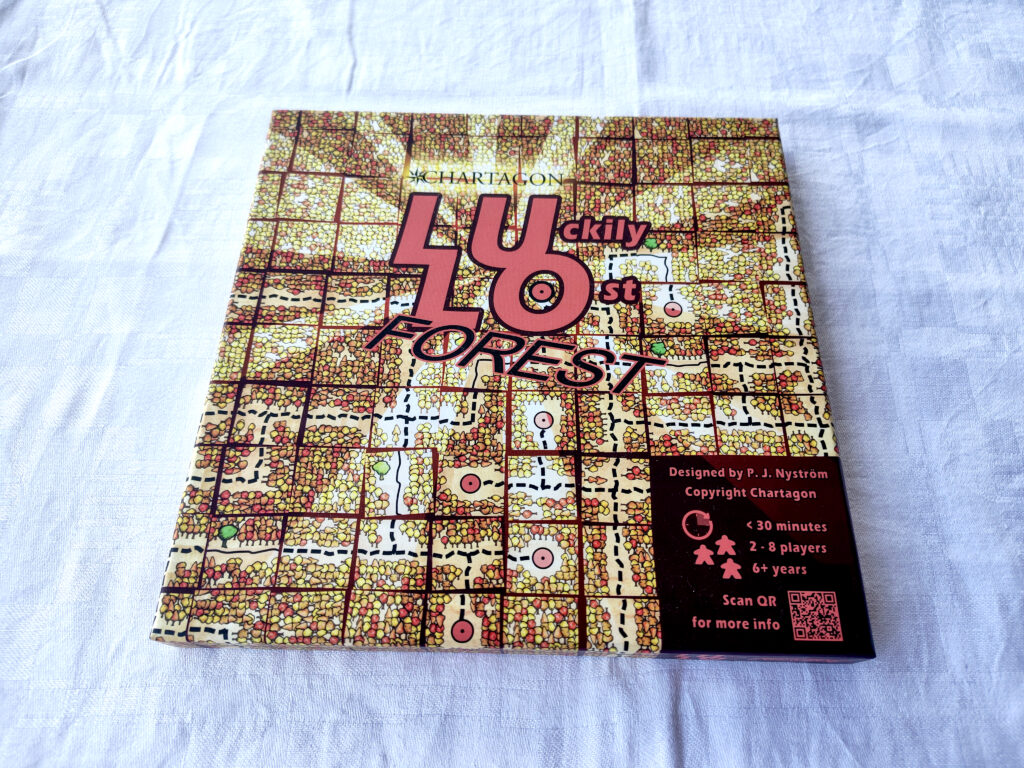
We are very happy to announce that we have the first copies of LULO in our hands!!!

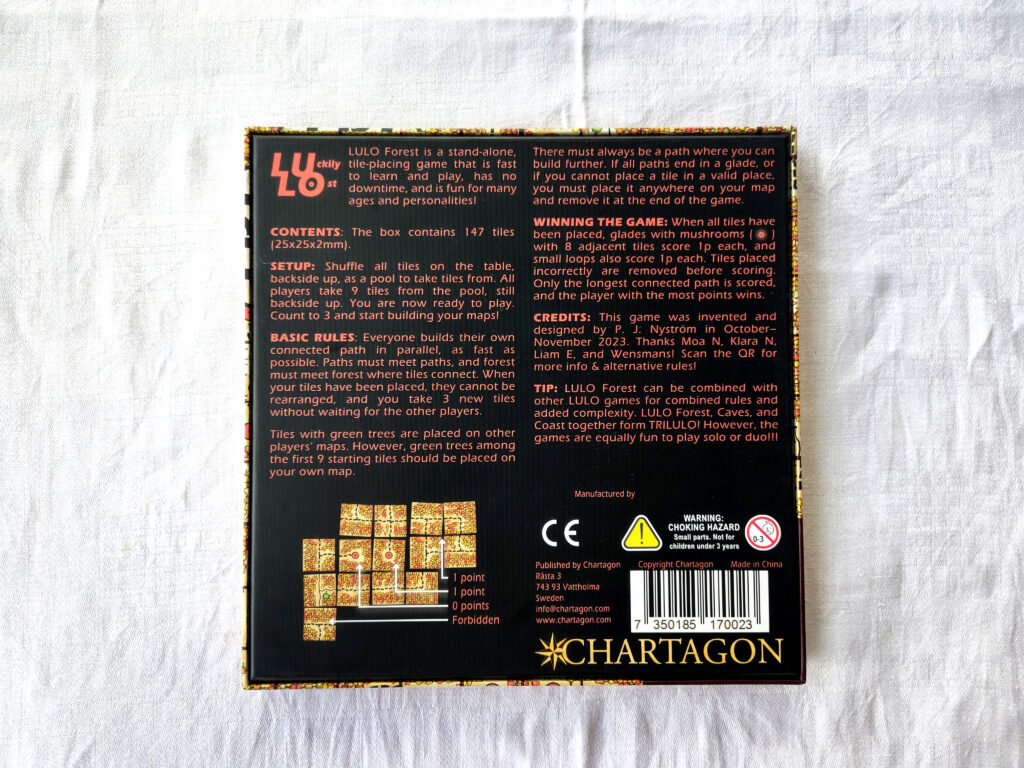
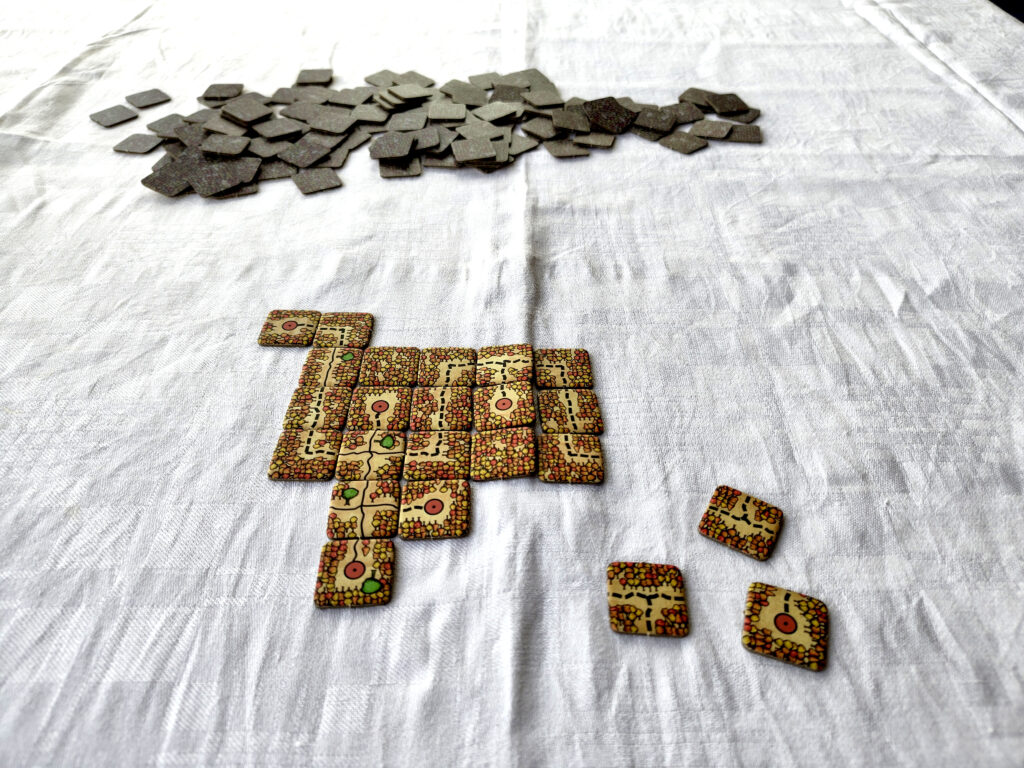
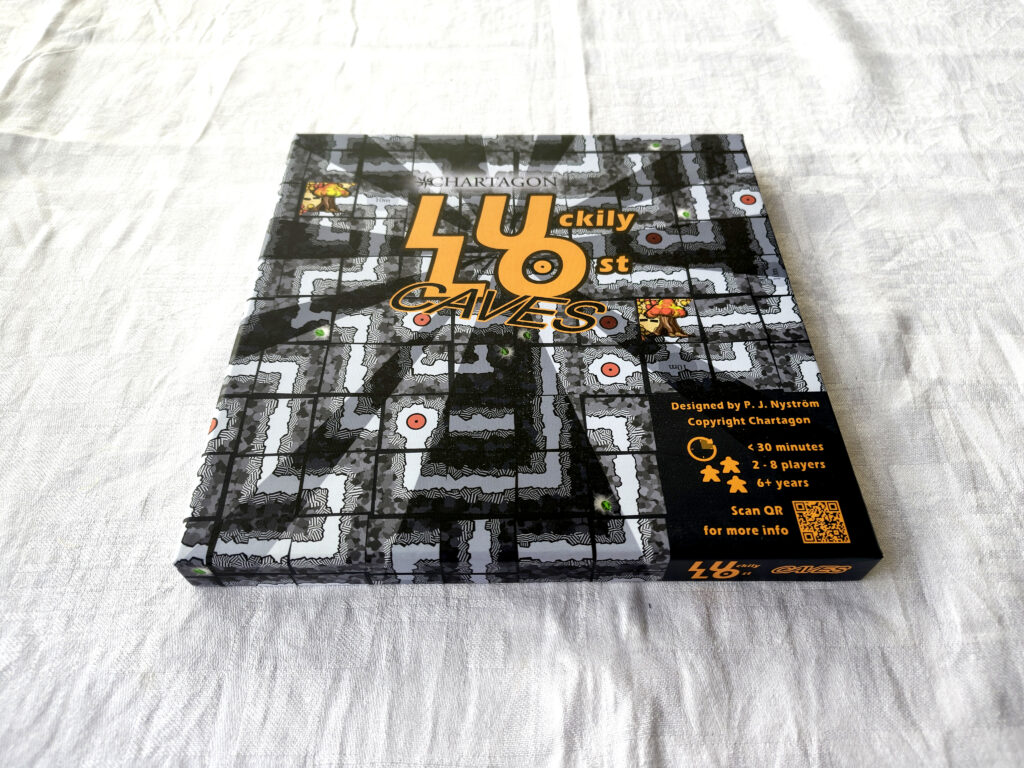
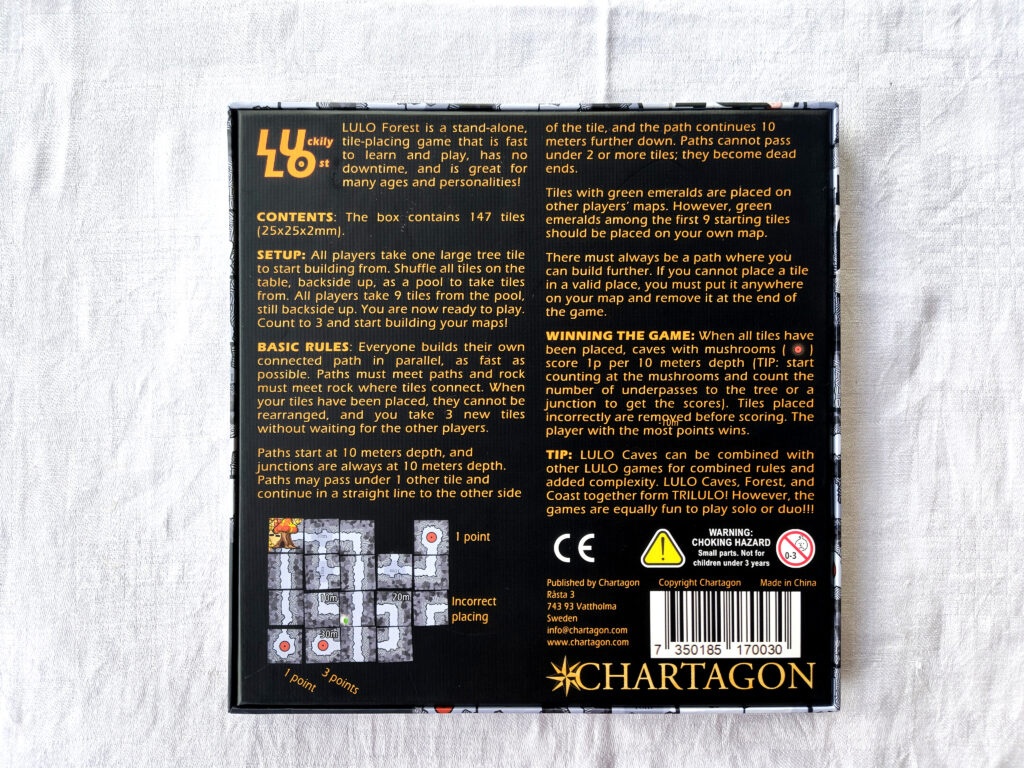
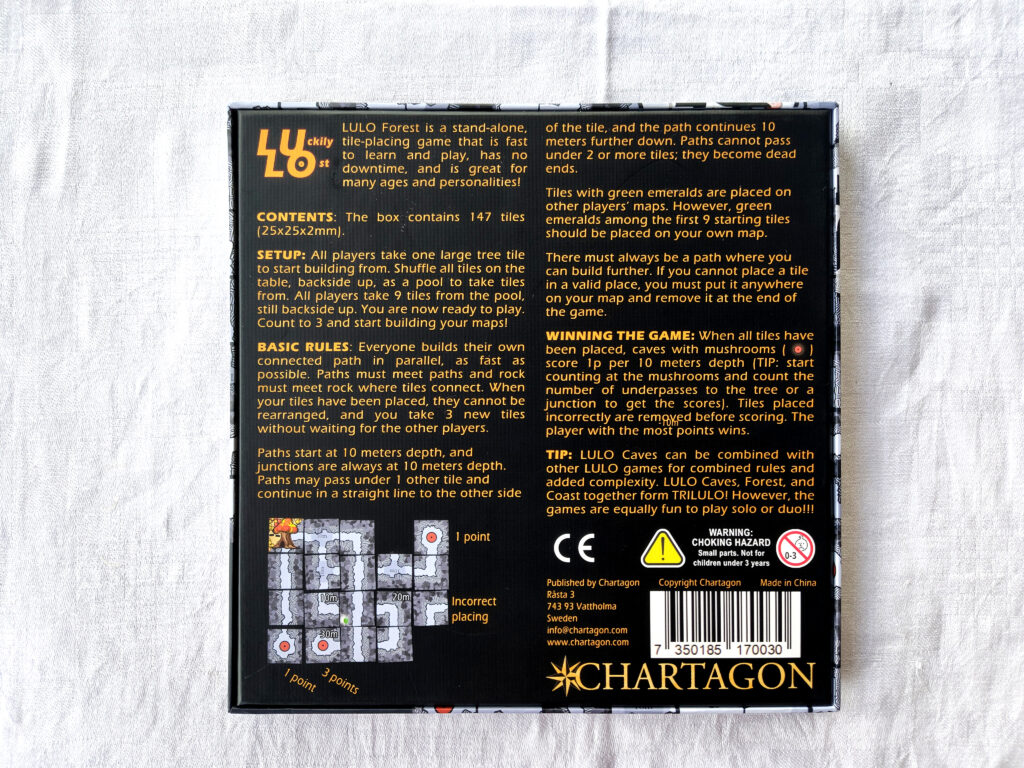
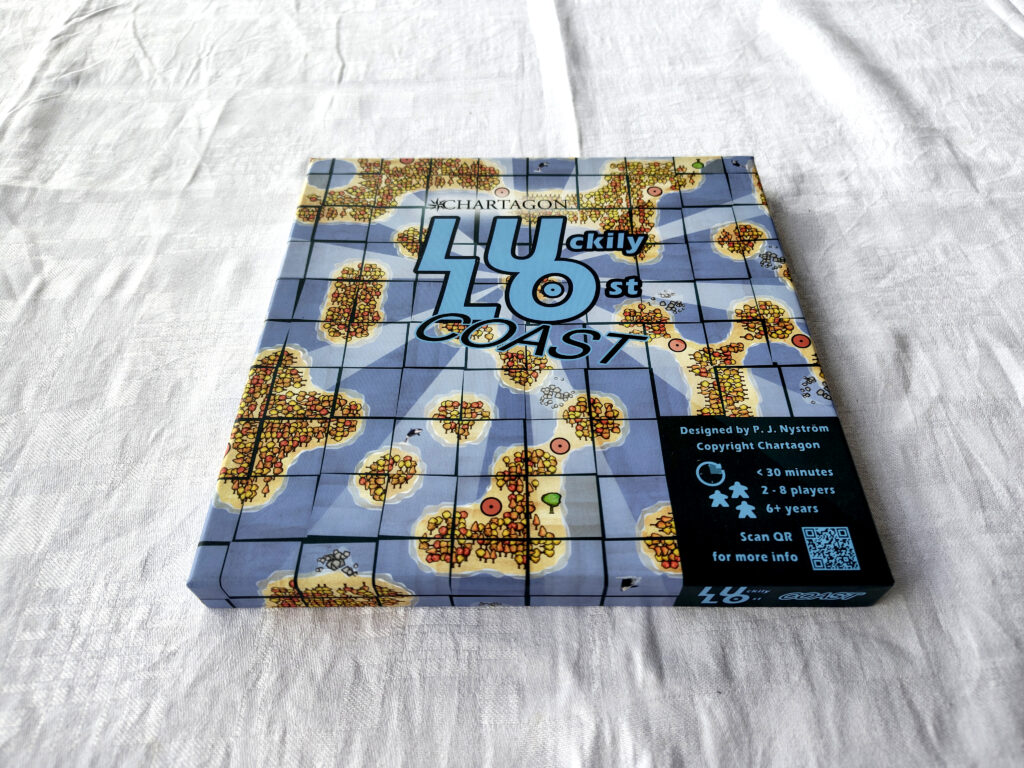
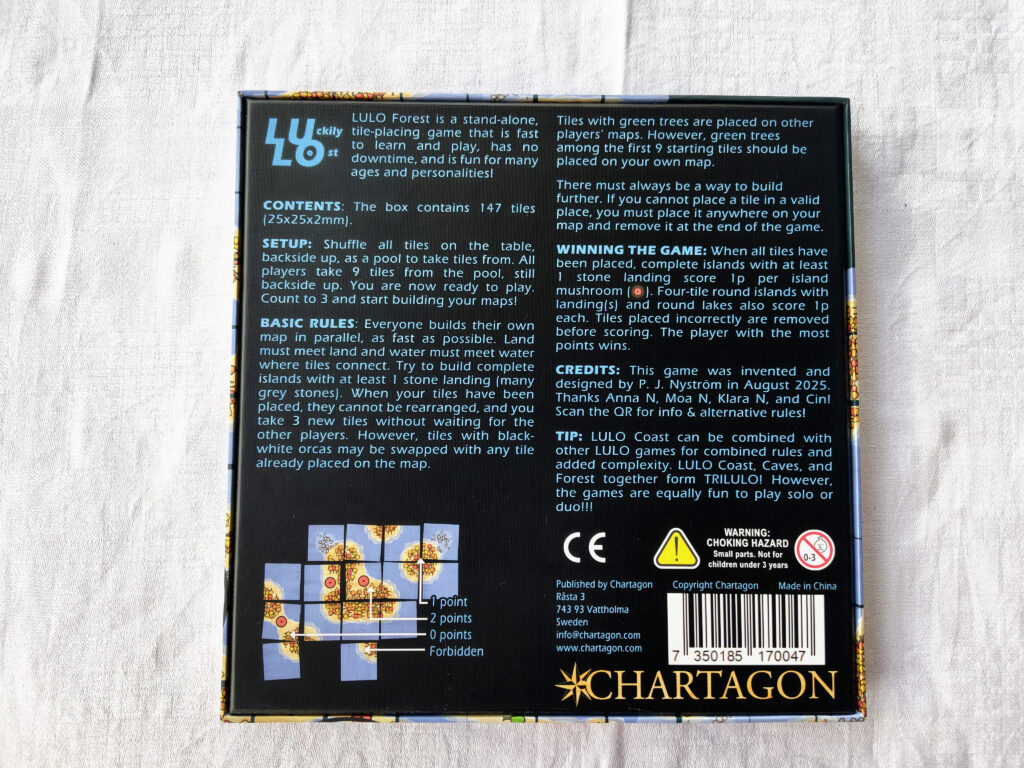
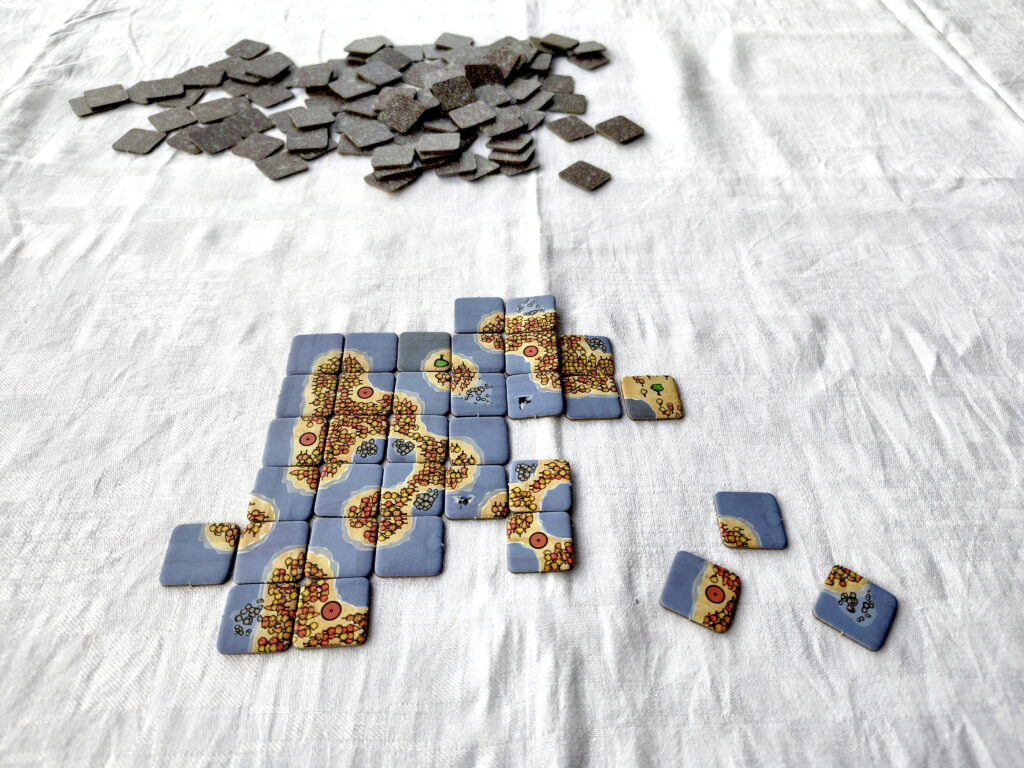
The LULO games (abbrevation of LUckily LOst) are fast to play, because you draw tiles in parallell from a common pool until the pool runs out. That means zero downtime! You use the tiles to build paths that gives you scores in different ways in the different versions of LULO: you either play in the forest, in caves, or at small islands at the coast.

The games can be played individually or combined in any way you want, to give you different experiences and adjust the playing time. If you play all three games at the same time, we call it TRILULO. With only one biome, expect each round to take 2-5 minutes, and with more players it is only faster. We think LULO is an excellent way start of every game night, and hope you will like it as much as we do. LULO quickly became one of our favorite games, and we felt an urge to prioritize this release!

Posted on

Chartagon: The Dig

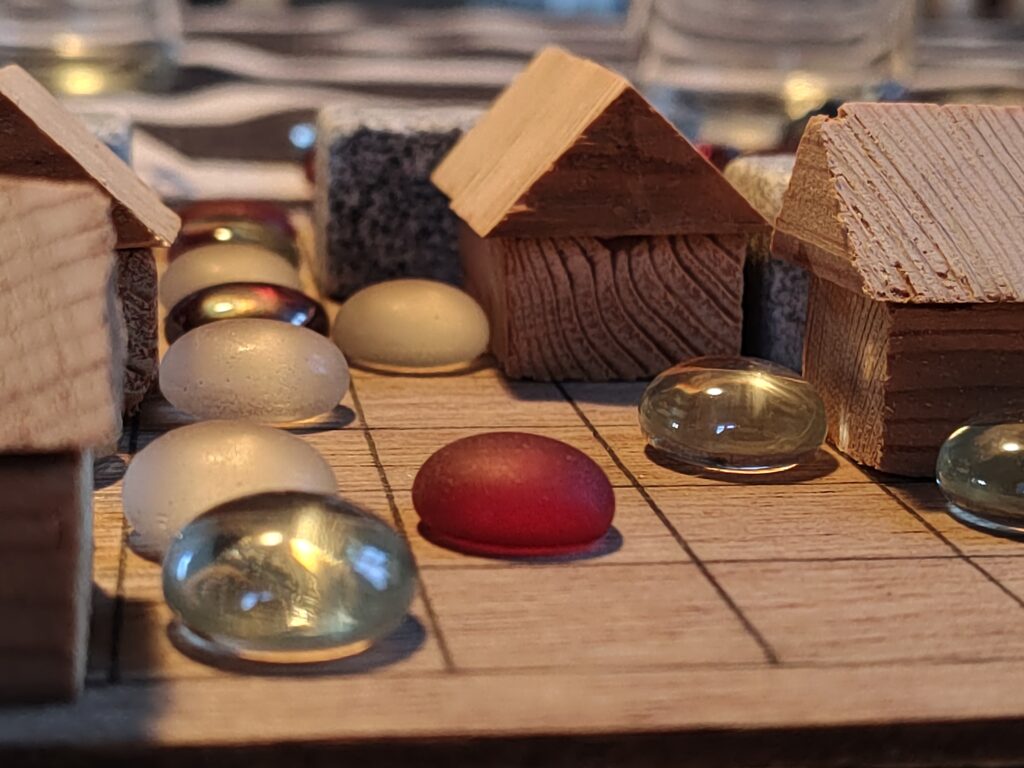
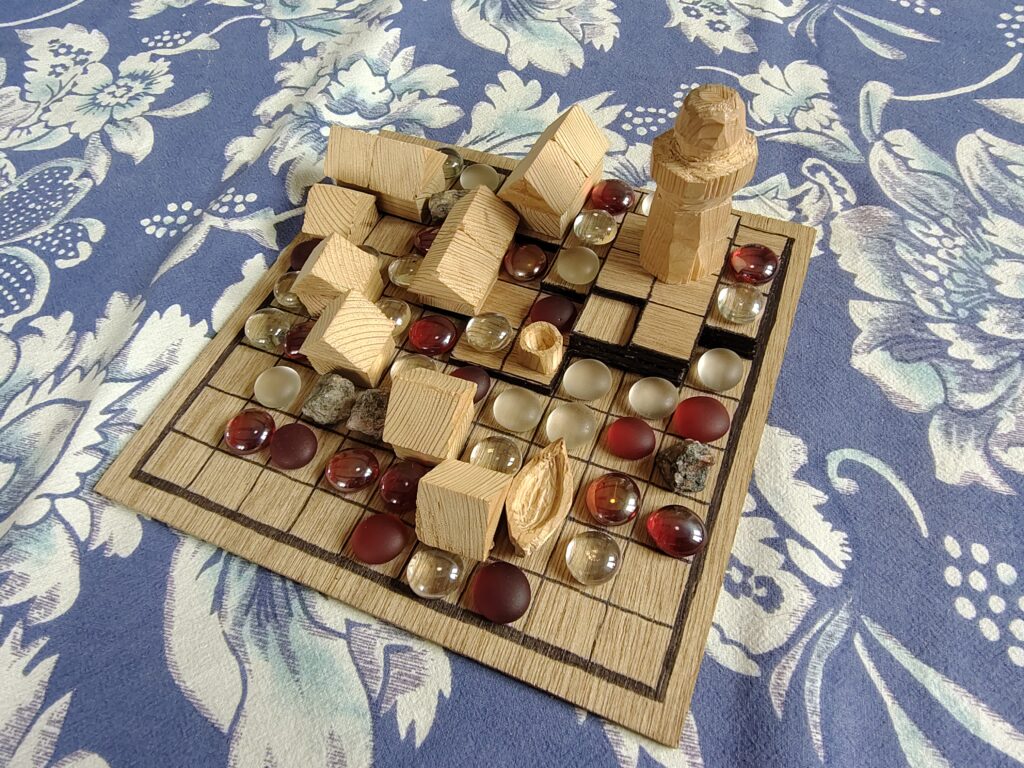
Chartagon: The Dig is a short game of esthetics and composition. The mechanics forces new settlement layouts to appreciate for every game, including X small houses, X large houses, 1 small well, 1 large boat (on the boatyard), and 1 large lighthouse, and although each player scores points, the game explicitly says that winning or losing is of minor importance.

The game setting is at an archeological site, where players use old village map fragments (cards) to reconstruct the original Chartagonian light house settlement. Each player draws a pearl from a bag and places it to expand his/her/their digging grid. Red pearls represent potential building remains and white pearls mean that nothing was found at that location. The patterns of red and white pearls together with the buildings at different levels of the topography gives complex and truly enjoyable compositions, and it is easy to imagine the everyday life in the miniature versions of the wind-exposed settlements, where buildings are packed tight together to shield from wind, rain and snow.

The game is ready for playing, and hand made boards and pieces can be manufactured on request. Contact us at info@chartagon.com if you are interested in a quote, but expect it to be quite pricy, since we don’t intend to make a lot of these games. If you want to know more about this game, here are the rules:

Posted on

Working in silence…

Again, time has rushed and we have been working silently across several years. So, what has happened? Well, to start with, we have found another game manufacturer than before, LaunchTabletop, and we have just received 30 boxes of the games Chartagon: Discoveries, and LULO forest / caves / coast (i.e., Trilulo). We will soon post about the latest shipment, with photos and all, for both games separately. We’re really exited about this, because it is REAL game this time, not prototypes!

To get the EAN codes for the games, we finally started a small company in Sweden, and we are ready to sell on larger scales than hobbyist! However, the plan is to grow slowly to keep our costs down, and the first step is to get the products reviewed by an independent reviewer on YouTube. Regarding reviews, we’ve been regular exhibitors on LinCon, and have had great reviews from there, that hopefully was not too heavily inflated by the fact that we were there ourselves.

We’ve also designed a lot of new games during the last years:

  • “LULO Forest”, which is ready! LULO is an abbrevation of “Luckily Lost”.
  • “LULO Caves”, which is ready!
  • “LULO Coast”, which is ready! The three games can be played separately or combined, in which case we call it Trilulo.
  • “Sun run at crocus cove”, which has full game tested mechanics, but not the graphical/material design. The game involves rather complicated tiles, and the look’n’feel depends a lot on the material. The final product finish is not decided yet, and maybe it will only be a very limited series.
  • “Chartagon: The dig”, which is ready for a very limited hand-made series. This game is really nice as a chocolate morsel, in comparison to Chartagon Discoveries, which is a full cake.
  • “Chartagon: Fog horn (part I)”, which now has ready game mechanics, but not the final graphical layout. This is a solo player card game that requires several runs of trial-and-error and discoveries to figure out how to solve the puzzle.
  • A solitaire game with square cards, which is ready and hopefully printed soon! The final graphics is not yet done, but we know what we want.
  • “Biimsi”, which is ready! It is not completely clear if this is a Chartagon game or not, since it is a very different from the other games. It is more like Sudoku, or crosswords, which are intented for pen and paper in journal print (try it at https://biim.si). Also, Biimsi was inspired by Chartagon archive fragments about Chartagonian harbor life, where we found the rules for a similar (and “real”) Chartagon game called “Dandan” or “Verdanbo”. We hope to devote more time into reconstructing this ancient game and publish a full version sometime in the future.

Of course, a lot more has been done, such as artwork and music for the games, and testing new ideas that did not measure up. All in all, we’re quite happy with what we’ve accomplished this far!

Posted on

Chartagonian walking game

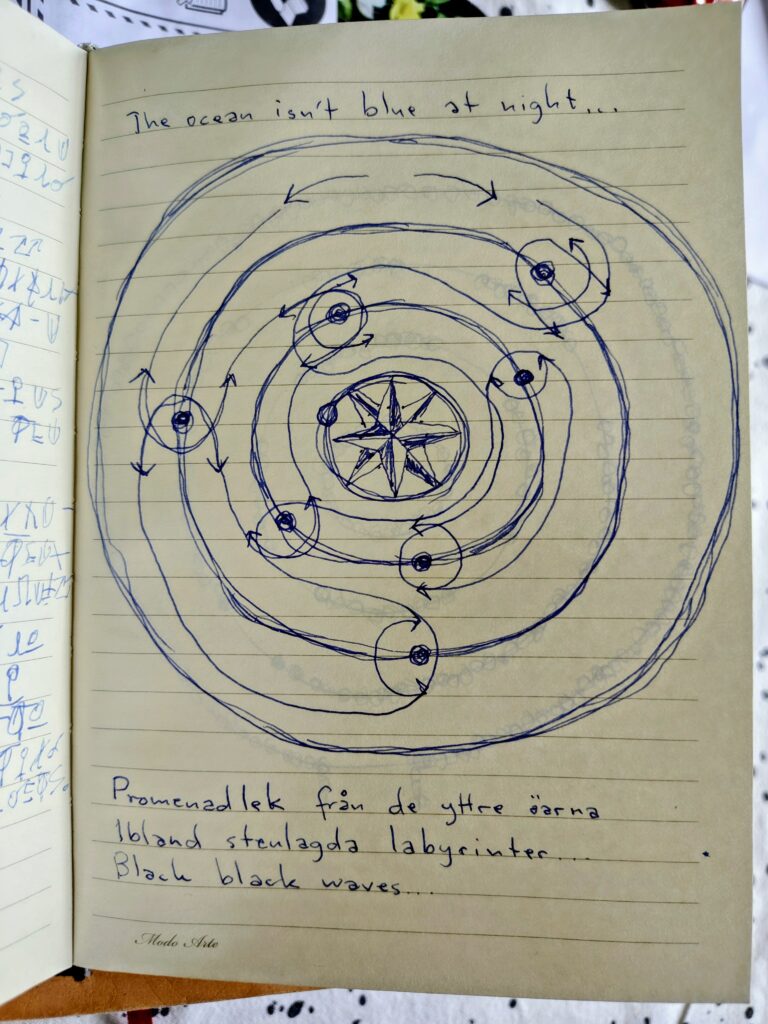
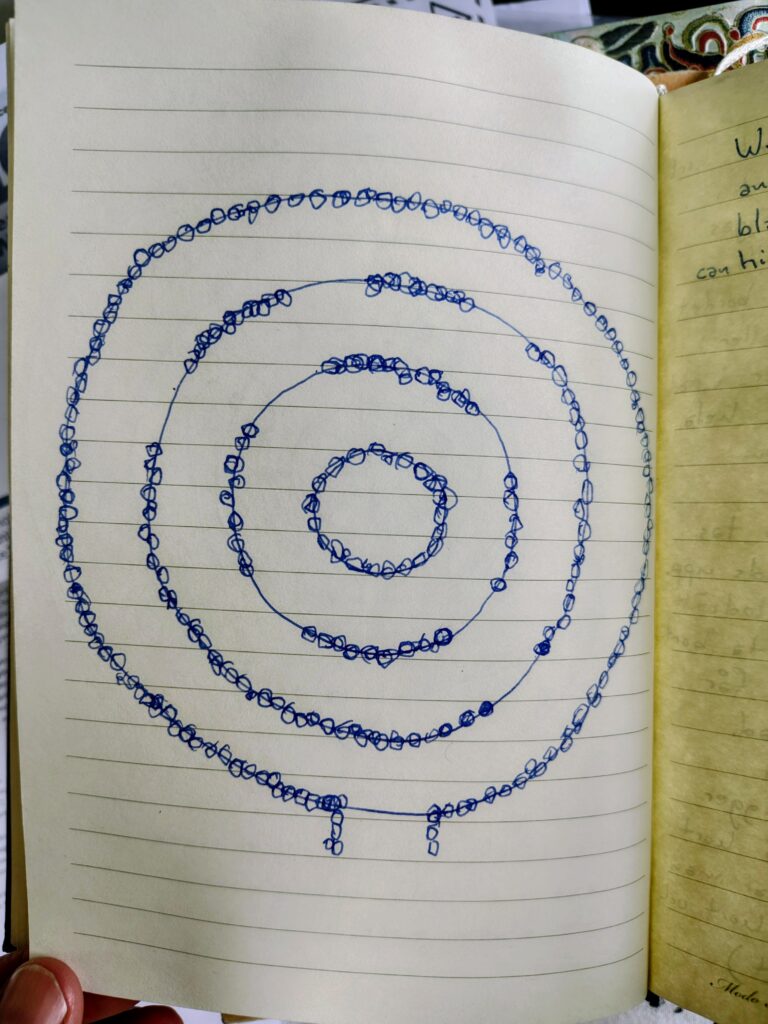
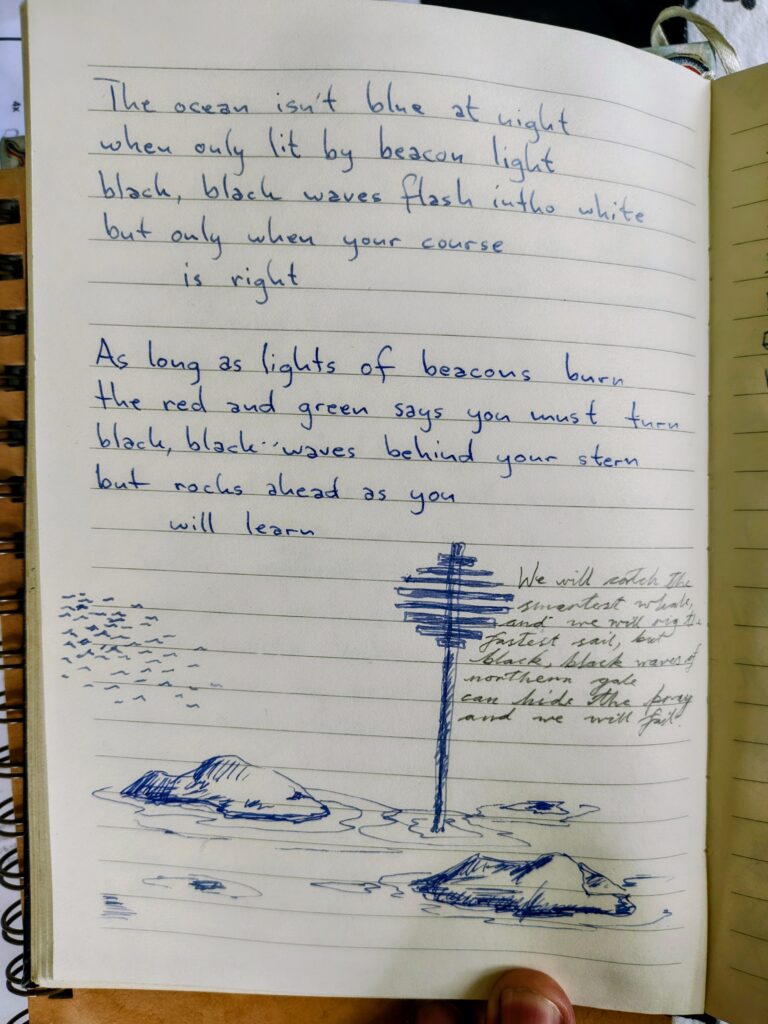
Finding the previous walking dance reminded me of some notes I made years ago (as you can see on my hand writing), about a walking game. I remember that I also found the melody, but I can’t seem to find it right now, so let’s hope I can make an update of this post later on with the melody. The game is from the outer islands, where the inhabitants built small labyrinths to walk in by placing rocks on the ground. The labyrinth had concentric cirles, and you could only move your walking direction (clock-wise / counter-clock-wise) when you moved from an inner to an outer cirlce or vice verse. Everyone walked in the same direction, except one person who should catch the other ones and that walked in the other direction. Everyone had to sing and walk in rhythm, and you find the lyrics a bit poorly translated from Chartagonian to English here:

The ocean isn’t blue at night
when only lit by beacon light
Black, black waves flash into white
but only is your course… is right

As long as lights of beacons burn
the red and green says you must turn
Black, black waves behind your stern
but rocks ahead, as you… will learn


[The last verse was found on another island, and I don’t think it was part of the standard singing, but it is worth adding for full transparency. The graphite text was added at a later time point, and is taken from a later note in the same note book.]

We will catch the smartest whale
and we will set the fastest sail
but Black, black waves of northern gale
can hide the prey and we… will fail

UPDATE: I still have not found the melody (though I now remember and can play the first and last parts), but I will place it here if I find it later on!

Best regards / Pär

Posted on

Chartagonian walking dance

Sometimes you stumble onto something unexpected in the material of the Clerk, and the other day an almost complete description of a Chartagonian walking dance was found. This dance was apparently an almost mandatory ending of festivities, before the parties returned home or continued under more informal forms (i.e., the youth kept dancing and socializing). What is particular about this dance is that it both strengthened the Chartagonian identity as well as island specific identity. The music had two parts containing two phrases, repeated as AABBAABB…e.t.c., and always ended with a single A, when everybody had danced one phrase with each person at the gathering. The A-phrase was the Chartagonian-wide melody, and the B-phrase was specific for each island. It it not clear who composed the A-phrase or the B-phrases, but it is likely that the B-phrases were changed over time, to fit the current settlements. The A-phrase has been unchanged since the first lighthouses, but we don’t know how the melody came into the descendants’ possession.

The dance is more walking than dancing, and gave everyone the opportunity to walk together in silence for a short time (or silently singing the lyrics, which is also unknown to us at this point). The dance started with everyone standing in pairs in a large circle, holding one hand of the other person, and during the dance everyone walked slowly forward in the ring to the tempo of the music, 3/4 at about 120bpm. After every phrase, the person standing on the outer side from the center moved forward to dance with the inner person in the pair in front. During every second phrase, one pair switched places, so that the outer person became the inner person, making everyone eventually dance with everyone. The last A-phrase was danced with the person you started to dance with. In practice, this meant that if there was 20 persons at the gathering, the music would play 21 phrases (with each phrase being about 16 seconds, the total duration would be 5-6 minutes).

We assume that quite a few feelings could be expressed through the light touch when leading each other in the ring, giving the opportunity to bringing people closer together or taking the edge of personal conflicts. Most of the time, this dance/walk would reduce the tempo of the party and be a real party-pooper, but most people seemed to be settling down in a good way before leaving for home.

In the example below, the melody is played as documented by the Clerk, on the form AABBAABBA (and therefore suitable for 8 people), but the first BB comes from one island and the second BB comes from another island, so you can hear the vast difference between the B-phrases of different islands. The Clerk left note transcriptions for five different islands, but leave references to other documents which we have not yet found in the archives.

The lyrics lack sophistication, and is written in an old Chartagonian style, at least in the A-phrase. There is no mentioning about lyrics for the B-phrase, but because the rhythm and length of the A-phrase does not match, we assume that there should be island specific lyrics for each B-phrase. While the known lyrics are difficult to translate to good English, the meaning should be something along these lines:

Thank you everyone for all this time
There is nothing that we should regret
This day will flee
but we will see a-
nother dawn when (the) sun has set

Posted on

A solitaire game, yet unnamed

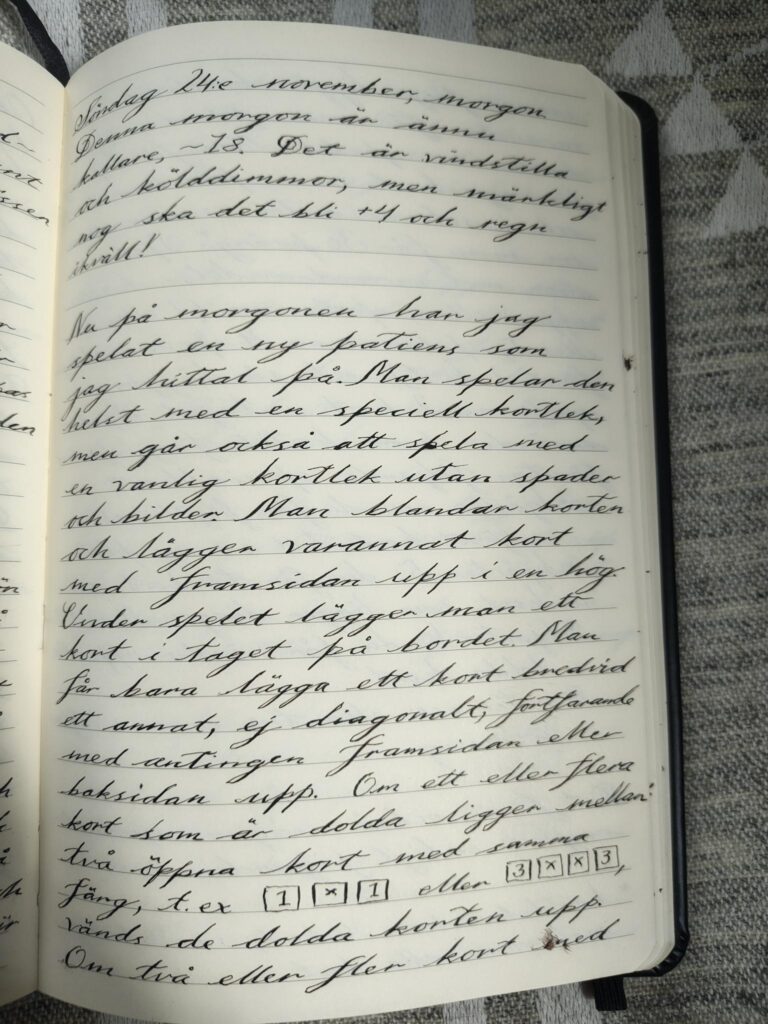
In the autumn of 2024, there was a cold November. I know, because I wrote down the rules for a solitaire game that I created in my note book where I also write a lot of other things. I had almost forgot about this solitaire, even though I find it a very nice way to waste my time (or actually, that should be procrastination). The rules are as follows (translated from my notes):

PAGE 1: Sunday, November 24th, morning

This morning is even colder, ~18. It is calm and freezing fog, but strangely enough, it is supposed to be +4 and rain tonight!

Now in the morning, I have played a new solitaire game that I came up with. You preferably play it with a special deck of cards, but it is also possible to play with a regular deck without spades and face cards. You shuffle the cards and place every other card face up in a pile. During the game, you place one card at a time on the table. You may only place a card next to another, not diagonally, still with either the front or back facing up. If one or more cards that are hidden lie between two open cards of the same suit, e.g., [1][x][1] or [3][x][3], the hidden cards are turned face up. If two or more cards with…

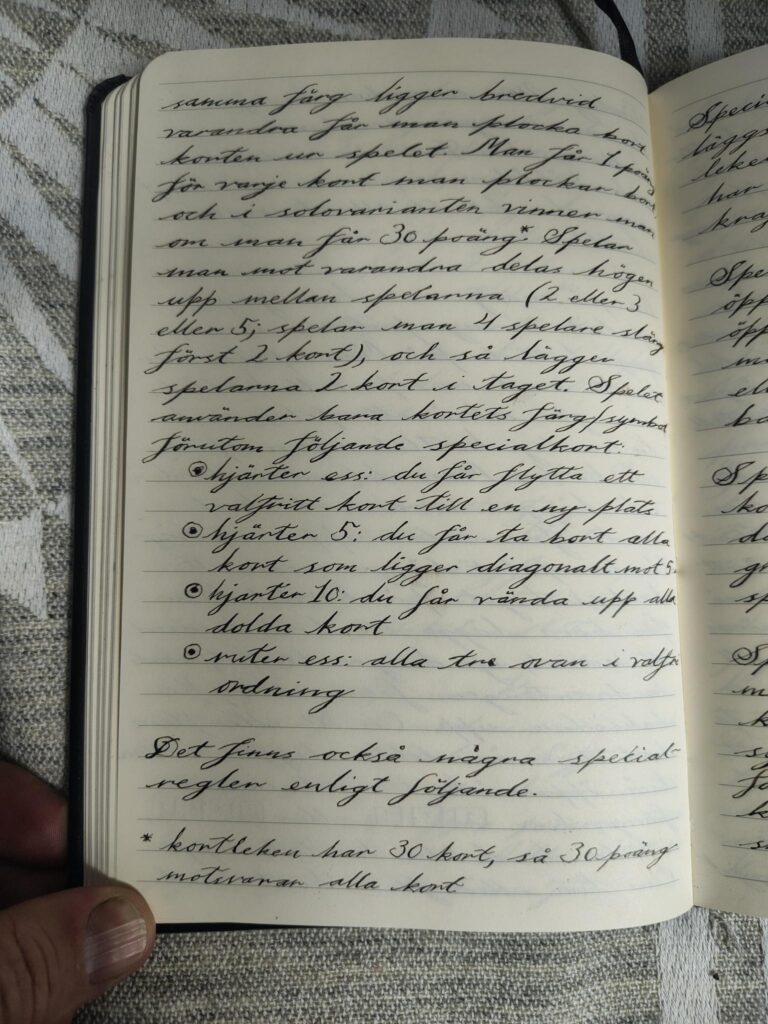
PAGE 2: …the same suit lie next to each other, you may remove the cards from the game. You get 1 point for each card you remove, and in the solitaire version, you win if you get 30 points*. If you play against each other, the pile is divided among the players (2 or 3 or 5; if playing with 4 players, discard 2 cards first), and then the players place 2 cards at a time. The game only uses the card’s suit/symbol, except for the following special cards:

  • Ace of Hearts: you may move any card of your choice to a new location.
  • 5 of Hearts: you may remove all cards that lie diagonally to the 5.
  • 10 of Hearts: you may turn all hidden cards face up.
  • Ace of Diamonds: all three of the above in any order.

There are also a few special rules as follows.

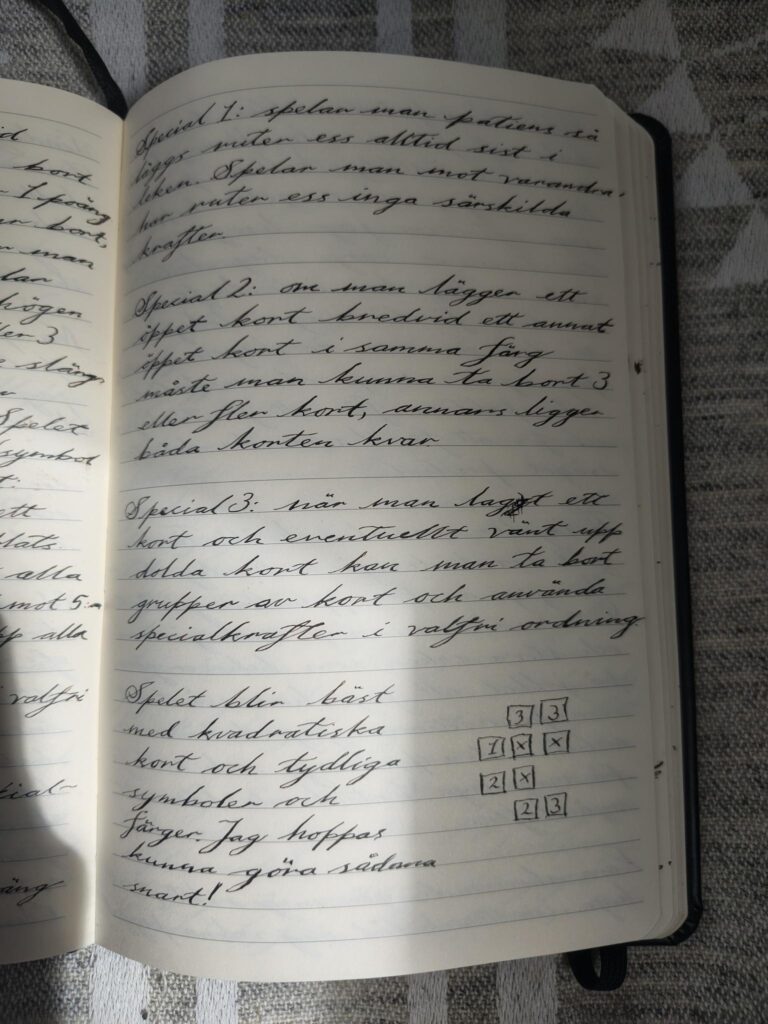
PAGE 3:

Special 1: if playing solitaire, the Ace of Diamonds is always placed last in the deck. If playing against each other, the Ace of Diamonds has no special powers.

Special 2: if you place an open card next to another open card of the same suit, you must be able to remove 3 or more cards, otherwise both cards remain.

Special 3: once you have placed a card and potentially turned hidden cards face up, you can remove groups of cards and use special powers in any order.

The game is best with square cards and clear symbols and colors. I hope to be able to make such cards soon!

The narrative: an archeologist is trying to decipher a long past astronomer’s work of the celestial movements during the time of the very first lighthouses. Each point in the solitaire represents a reconstructed and solved equation, and getting 30 points means that all off the old equations are restored from oblivion. Of course, the full work is essential to understand the dynamics and meaning of the celestial trajectories when Our Creator was at early work.